
 English
 Español
 Portugues
 Pусский
 Français
 Deutsch
 العربية
 Türk dili
 Indonesia
xe tải vận chuyển xăng dầu
A petroleum transport truck is a specialized heavy-duty commercial vehicle engineered to safely move large volumes of liquid hydrocarbon products—including gasoline, diesel, jet fuel, heating oil, and crude oil—between refineries, distribution terminals, and end-use sites like gas stations, industrial facilities, and airports. Unlike standard cargo trucks, every component of these vehicles is optimized for handling flammable, high-value liquids while mitigating risks of spills, fires, or mechanical failure.At its core, the truck rests on a reinforced heavy-duty chassis, typically a Class 8 vehicle built to support gross weights exceeding 36,000 kilograms when fully loaded. Its most defining feature is the cylindrical transport tank, most often crafted from lightweight, corrosion-resistant aluminum alloy to reduce fuel consumption and extend service life. The tank’s elliptical cross-section distributes pressure evenly across its walls, while internal baffles—solid, partition-like structures splitting the tank into small compartments—minimize liquid sloshing during transit, a critical stability feature that prevents dangerous swaying or rollovers on highways or sharp turns.Safety is the top priority in its design, with layered systems to prevent accidents and respond to emergencies. Advanced braking systems, including anti-lock braking (ABS) and electronic stability control (ESC), adjust to the heavy load to maintain stopping power and vehicle balance. Each tank compartment has emergency shut-off valves to isolate leaks, plus pressure relief valves that vent excess pressure from temperature fluctuations (petroleum expands when heated, which could rupture the tank if unregulated). Grounding metal straps, attached to the frame and dragging along the road, eliminate static electricity buildup—a leading cause of ignition, as even small sparks can ignite flammable fumes. All trucks display internationally recognized flammable hazard signs, product identification, and emergency response instructions.Operational protocols further ensure safety: drivers hold specialized hazardous materials (HazMat) certifications, follow strict pre-trip inspection routines, and adhere to regulated routes to avoid high-risk areas. Loading and unloading use closed systems to prevent spills and reduce evaporative emissions, while mandatory regular maintenance includes tank pressure tests, brake checks, and static line integrity assessments. On board, drivers carry spill kits, rated fire extinguishers, and constant communication tools for emergency support.These trucks form a critical link in global energy supply chains, balancing efficiency, safety, and environmental responsibility to deliver essential products reliably to communities without compromising public or ecological safety. (Word count: 498)
Sản phẩm
Danh mục:
-
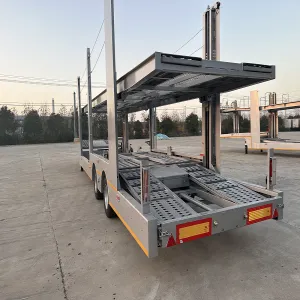
Trailer vận chuyển tự động trục giữa
Phân loại của họ: Trailer vận chuyển ô tôLượt xem: 521Số:Thời gian phát hành: 2026-06-02 14:56:15Rơ moóc vận chuyển ô tô trục giữa của Junchi Heavy Industry là loại xe chở ô tô nhẹ, có độ ổn định cao. Vị trí trục giữa giúp giảm phần nhô ra ở hai đầu, cải thiện khả năng cơ động trên đường hẹp và các góc cua hẹp. Lý tưởng cho việc giao hàng trong đô thị và vận chuyển ô tô trong khu vực.
Tin tức
Danh mục:
Không có kết quả tìm kiếm!
Trường hợp
Danh mục:
Không có kết quả tìm kiếm!
Video
Danh mục:
Không có kết quả tìm kiếm!
Tải về
Danh mục:
Không có kết quả tìm kiếm!
Tuyển dụng
Danh mục:
Không có kết quả tìm kiếm!
Sản phẩm được đề xuất
Không có kết quả tìm kiếm!



 Điện thoại